About Disce ludens
In short
Disce ludens (“learn by playing”) was created by Stuttgart Latin teacher Thomas Wegener. Out of 30 years of teaching at the Dillmann-Gymnasium came three learning programs, written between 1997 and 2005, which now comprise 69 lessons and 4,260 exercises. His former student Stephan Sigloch carries them on as a web app – with the same teaching method.
A Latin teacher and his program
Thomas Wegener (1943–2025) taught Latin for decades at the Dillmann-Gymnasium in Stuttgart, Germany. He wanted his students to be able to practise at home as if someone were sitting next to them who shows the way but does not give away the answer.
Between 1997 and 2005 this became three learning programs: Disce ludens I with 31 lessons for beginners, Disce ludens II with 31 lessons for advanced learners and Verte ludens, a translation trainer with seven exercises on sentences based on Caesar. The first version ran on the Apple Macintosh with HyperCard; a Windows version followed.
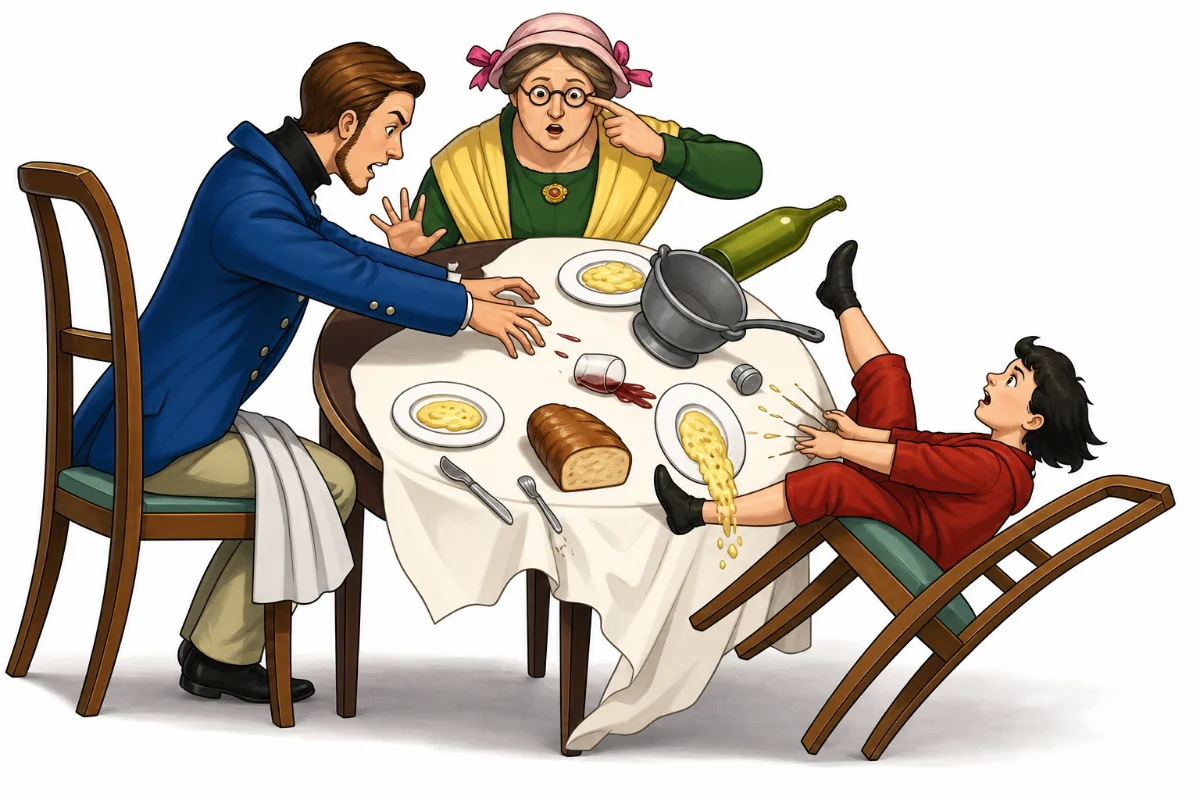
He tested every lesson in his own classes and improved it based on their feedback. The drawings in the exercises were made by his students. For the new app we are redrawing them step by step – same characters, same joke, in a contemporary style.



“The program seems more valuable to me than ever.”
From student to publisher
One of his students was Stephan Sigloch. He learned Latin with the textbook Ianua Nova, with Disce ludens alongside it in class, and finished school at the Dillmann-Gymnasium in 2000 with the advanced Latin certificate (Großes Latinum). As a student he helped Thomas Wegener develop the first versions.
Today Stephan Sigloch is an IT specialist and entrepreneur. With his teacher’s permission he and his team have brought the program to today’s devices: from the Macintosh via Windows to a web app, soon also as an app for iPhone, iPad and Android. After Thomas Wegener’s death he carries it on.

What stayed and what is new
The teaching method stayed: the same exercises in the same order, the same hints, the same rules for mistakes. If you like, you can even see the exercises as in 1998 – in nostalgia mode.
- For today’s devices: the modern mode runs in the browser on phone, tablet and computer and works with keyboard and screen reader.
- Fair checking: answers are checked on the server; solutions are not in the browser.
- Privacy: the demo and schools need no email address; there are no ads and no tracking for children.
The app is in German: exercises, hints and meanings are German, as in the original.
Try it
A real exercise from Disce ludens:
Disce ludens I · Lesson 8 · Sentence elements trainer, card 1
Lucius et Marcus amici boni sunt.
Which sentence element is marked?
© Disce ludensWhat Disce ludens does – and what it doesn’t
What Disce ludens does
- Practises the basics up to reading Caesar: forms, syntax, vocabulary and first sentences based on Caesar.
- Guides with graded hints instead of only saying right or wrong.
- Works with any Latin textbook; the recommended order comes from the classroom.
What it doesn’t do
- Is not available in English – the app is in German.
- Does not replace teaching or a teacher who explains.
- Has no teacher view yet; it is planned.
Frequently asked questions
Who developed Disce ludens?
Thomas Wegener, a Latin teacher at the Dillmann-Gymnasium in Stuttgart, between 1997 and 2005. Today it is published by Stephan Sigloch, a former student who already worked on the first versions.
What does Disce ludens mean?
It is Latin for “learn by playing”. Verte ludens, the translation trainer, means “translate by playing”.
Is the app in English?
No. Exercises, hints and meanings are in German, as in the original program.